

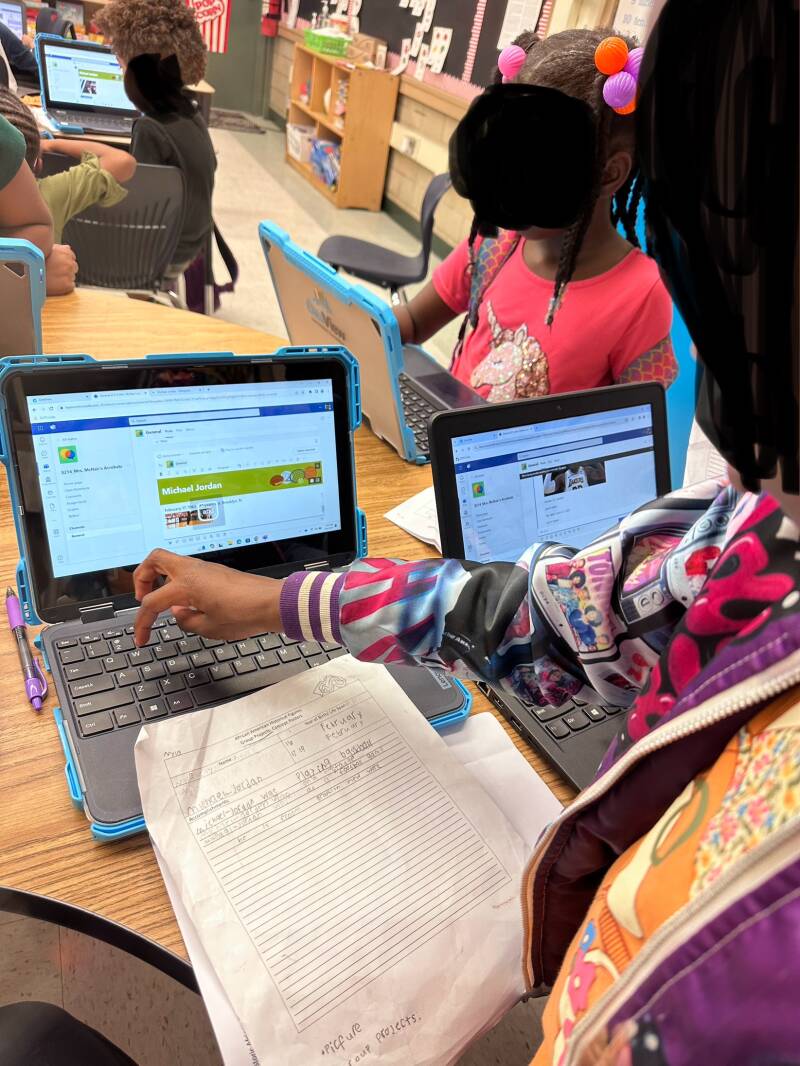
Digital Natives are considered young people who can navigate technology instinctively. The misconception is that digital natives are born with innate technological skills and are born into the world with distinctive computer skills. Digital immigrants are considered older people who possess limited knowledge of basic computer skills. The misconception is that Digital immigrants require assistance from others to navigate technology.
As a group of first graders, I have observed representatives of both the digital natives and digital immigrants’ argument. Many of my students possess basic computer skills evidenced by their ability to log onto the computer using their login information or by memory. Others must be taught how to operate the computer and how to use some of the key functions such as the “Shift” and “CapsLock” keys for case-sensitive passwords. Regardless of the grade level of the students in elementary, this phenomenon is true. Some students have been taught basic computer skills and have access to technology at home whereas the striving students or digital immigrants have very limited experience and access to technology (Bennett & Maton, 2010; Flynn, 2021).
As educators, we receive students with various skillsets. What observations do you have of your students that support the digital native argument?
Reference:
Bennett, S., & Maton, K. (2010). Beyond the 'digital natives' debate: Towards a more nuanced understanding of students' technology experiences. Journal of Computer Assisted Learning, 26(5), 321–331. https://doi.org/10.1111/j.1365-2729.2010.00360.x
Add comment
Comments